

The Anatomy of a Tactical Flag: Why Yours is Fraying and Ours Isn't
Feb 21, 2026
You know that tactical flag patch you bought six months ago? The one that's now shedding threads like a stressed-out golden retriever?
Yeah, that one.
The edges are curling. The stitching is coming undone. Every time you peel it off your plate carrier or pack, a few more fibers give up and die. You wash it once, maybe twice, and it looks like it went through a wood chipper.
This isn't bad luck. This is what happens when you buy cheap shit.
Why Your Flag Is Falling Apart
Most tactical flags on the market are mass-produced garbage. They're made overseas by manufacturers who've never strapped on a plate carrier, never spent 12 hours in the field, never had their life depend on gear that doesn't quit.
The construction method is simple: cut costs, cut corners, move volume.
Here's what that means in practice:
Inferior stitching. The edges aren't reinforced. The thread quality is bottom-tier. The embroidery is loose enough that fibers start pulling free the moment you look at it wrong.
Substandard materials. Cheap backing fabric. Generic thread that fades after three washes. No UV resistance. No consideration for sweat, rain, dust, or any of the conditions you actually operate in.
Garbage fasteners. Not actual VELCRO® Brand hook fasteners: knockoff hook-and-loop systems that lose their grip after a dozen attachment cycles. Your patch starts peeling off mid-op, and you're safety-pinning it back on like you're at summer camp.
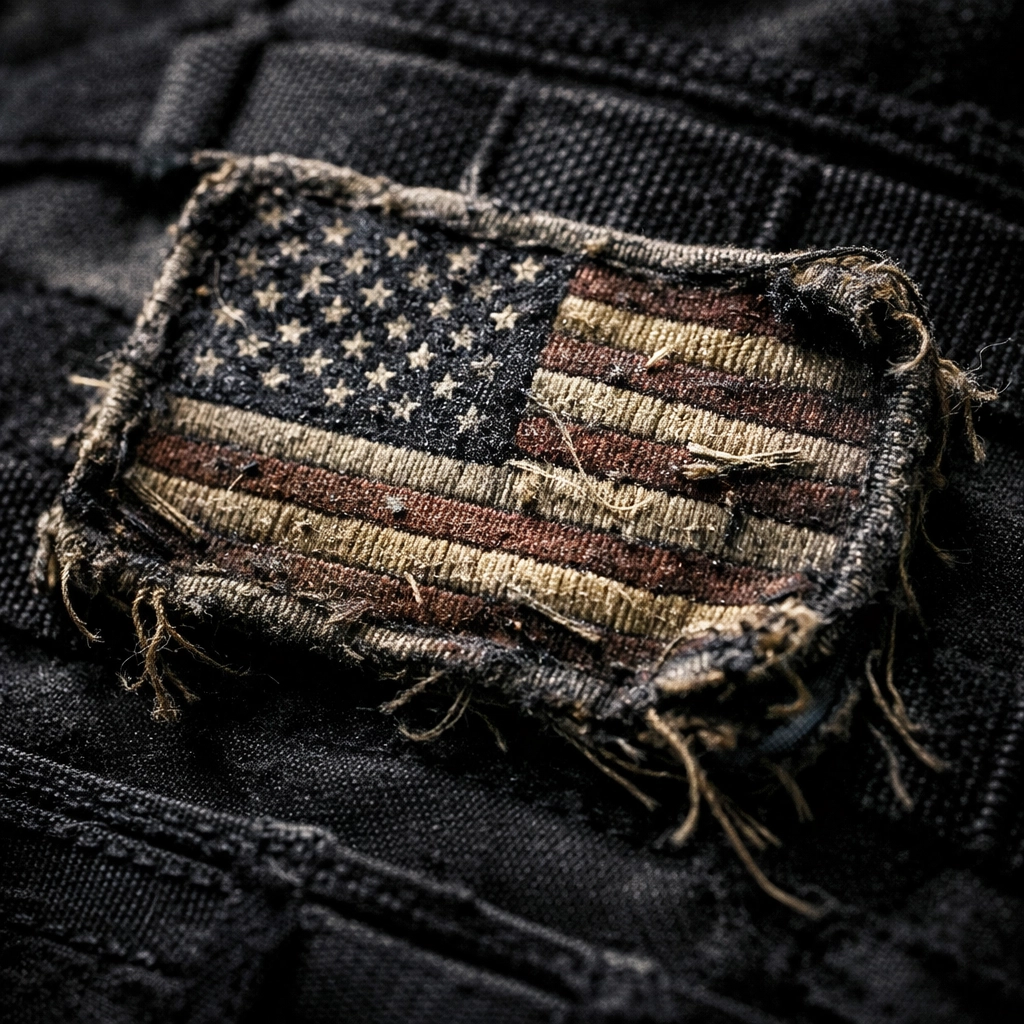
The result? Your flag looks like hell in under a month. The fraying starts at the edges and works its way inward. The colors fade. The whole thing looks like you pulled it out of a dumpster behind a surplus store.
And that's exactly what you paid for.
What Actually Makes a Flag Last
Building a tactical flag that doesn't disintegrate requires attention to detail most manufacturers don't bother with.
Material selection is the foundation. PVC patches solve the fraying problem entirely: they're constructed from solid polyvinyl chloride, so there's nothing to unravel. PVC is waterproof, dimensionally stable, and handles harsh environments without complaint. It doesn't care about rain, sweat, or getting stuffed into a pack for three days straight.
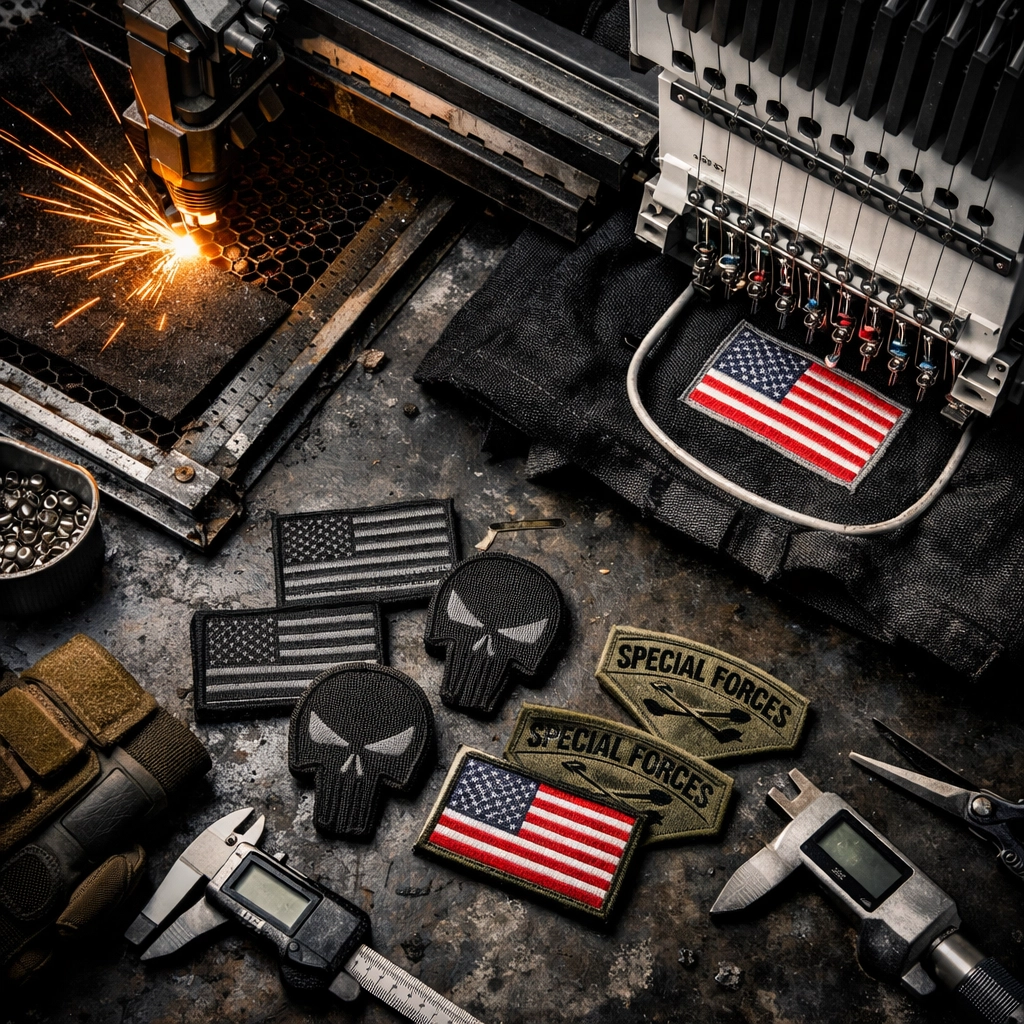
Embroidered patches can match that durability, but only if they're built right. That means laser-cut edges instead of traditional cutting methods. Laser cutting creates a clean, sealed edge that won't fray. It's precise. It's consistent. It's not cheap.
Stitching matters. Commercial computer embroidery machines create tight, uniform stitching across the entire patch. The thread is high-grade and fade-resistant. The backing fabric is designed to handle 50-plus wash cycles without breaking down. Every stitch is deliberate. Every edge is reinforced.
This isn't artisan craftsmanship for the sake of looking fancy. This is engineering for durability. Your flag needs to survive the same conditions you do.
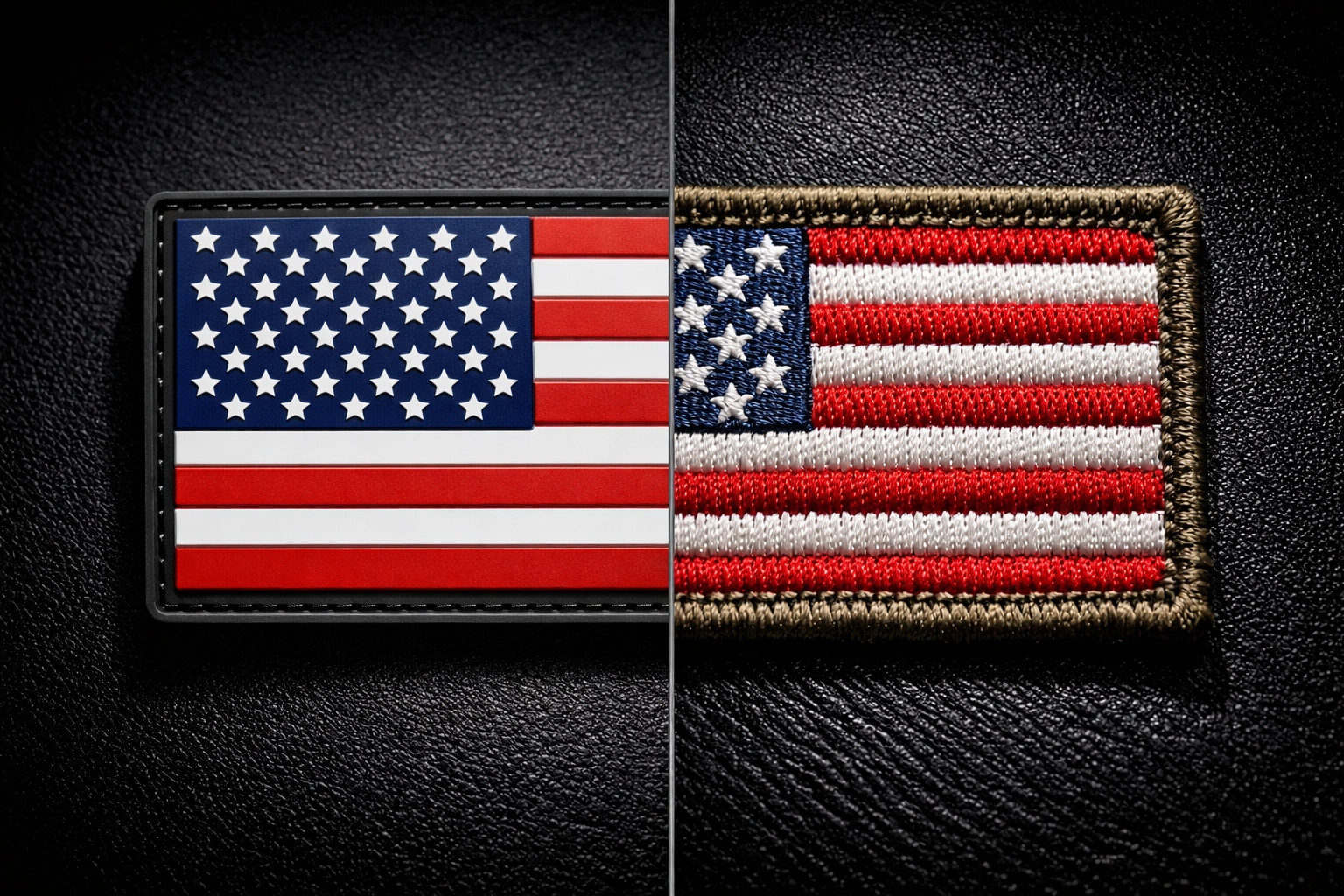
Fastening systems separate the winners from the also-rans. Genuine VELCRO® Brand hook fasteners aren't just about brand recognition: they're about performance through repeated cycles. You peel that flag off and slap it back on a hundred times, and it still grips like day one. Generic alternatives fail after a dozen uses, and then you're dealing with a patch that won't stay put.
When your gear fails, you expect to self-rescue. When your flag fails, you look like you don't know how to choose equipment that works.
The USA Manufacturing Difference
There's a reason USA-made patches cost more. It's not patriotic window dressing. It's infrastructure, quality control, and accountability.
USA manufacturers use laser-cutting technology and precision embroidery equipment because the investment pays off in product consistency. Every patch meets the same standard. There's no variation batch-to-batch because some factory worker overseas decided to phone it in that day.
Quality control actually exists. If a batch doesn't meet spec, it doesn't ship. There's accountability in the supply chain. There's a standard being upheld.
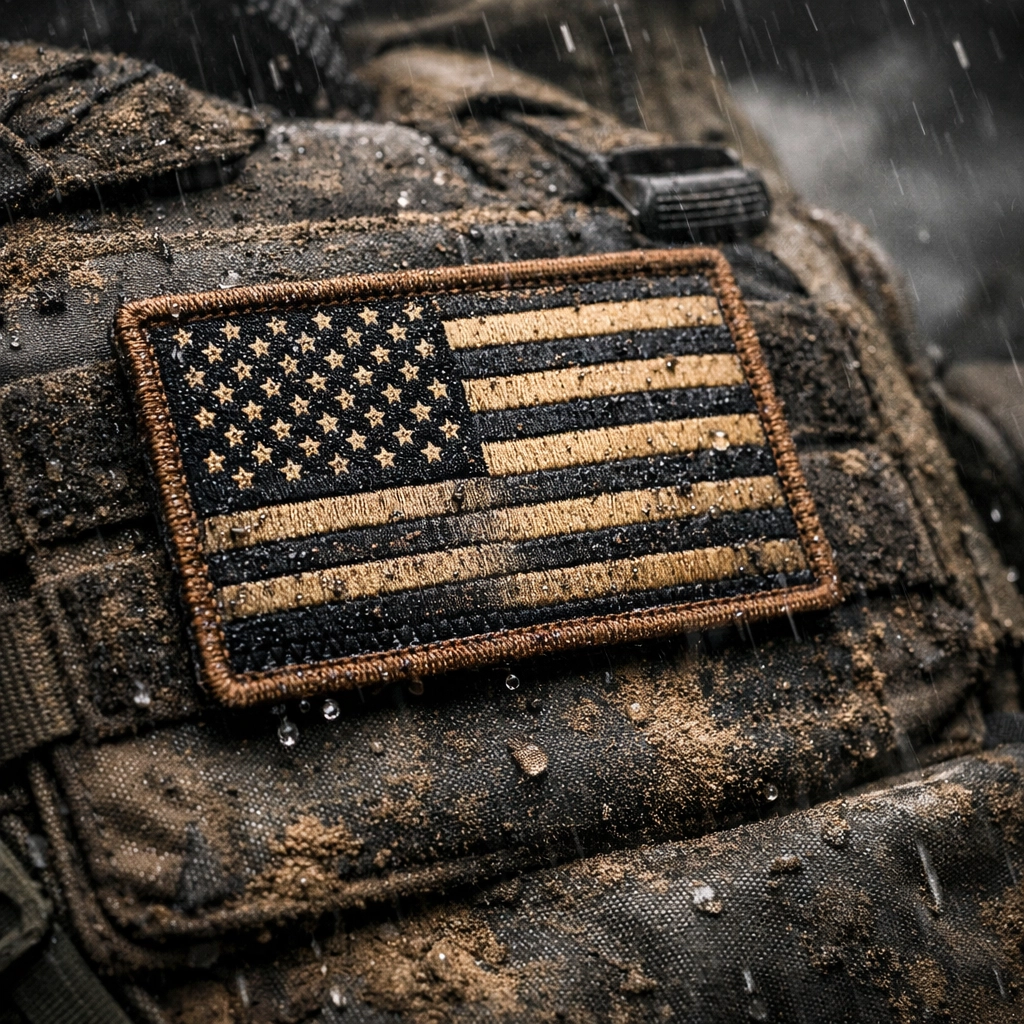
AR 670-1 compliance isn't just a regulation checkbox. It's a durability benchmark. Patches that meet military uniform standards have been tested for sweat, sun, rain, and repeated attachment cycles. They're built to survive field conditions: not just look good in a product photo.
When your patch meets AR 670-1, it means someone actually tested it under load. It means the construction can handle the environments where you actually operate.
Why This Matters Beyond Gear Nerds
You wear a tactical flag because it means something. It's not fashion. It's not a trend. It's a statement about who you are and what you stand for.
When that flag starts falling apart, it's sending a different message: you settled for cheap gear. You didn't do the research. You picked based on price instead of quality.
That's fine if you're buying a keychain. It's not fine if you're building a kit you depend on.
The "Expect To Self Rescue" lifestyle isn't about being paranoid or over-prepared. It's about understanding that no one else is responsible for your readiness. You are. That applies to training, mindset, and the gear you choose to represent yourself with.
Your tactical flag sits on your plate carrier, your pack, your kit. It's visible. It's part of your presentation to the world. If it looks like trash, what does that say about the rest of your gear? About your standards? About how seriously you take your own preparedness?
Details matter. The patch matters. The construction matters. The quality matters.
What We Build At TSO
We're not in the business of moving cheap volume. We're in the business of building gear that doesn't quit.
Our tactical flags are laser-cut, precision-embroidered, and constructed with materials designed to outlast your deployment, your rotation, your career. PVC options for maximum durability in hostile environments. Embroidered options with reinforced edges and fade-resistant thread for those who prefer the classic look without the classic failure modes.
Genuine VELCRO® Brand fasteners. USA manufacturing. Quality control that actually controls quality.
We test these flags the same way we test everything else: we use them. Hard. In the field. In the weather. Through repeated cycles. If something doesn't meet standard, it doesn't make it to the website.
This isn't marketing copy. This is how we operate. We expect to self-rescue, and we expect our gear to hold up while we do it.
Your tactical flag shouldn't be a liability. It should be one less thing you have to worry about. Build your kit with gear that works, or expect to replace it when it matters most.
Check out our full collection if you're tired of frayed edges and patches that look like they've been through a blender. We don't release weak shit. We release gear that survives contact with reality.
Because when it counts, you expect to self-rescue. Your gear should expect the same.

