

Heavy Days & Dark Humor: Why We Wear Our Jokes on Our Sleeves
Feb 22, 2026
You can tell a lot about someone by what makes them laugh.
In the veteran and first responder community, the jokes get dark. Real dark. The kind of dark that makes your well-meaning aunt uncomfortable at Thanksgiving. The kind that has HR pulling you aside for a "chat."
And we wear those jokes on our chests anyway.
The Unofficial Therapy Session
Nobody teaches you how to process the heavy stuff. There's no manual for filing away the images that stick, the calls that don't end well, the missions that go sideways despite everyone doing everything right.
So you crack a joke.
Not because it's funny. Because it's the only thing standing between you and the weight crushing down. Dark humor becomes the pressure release valve when the alternative is breaking.
One author put it perfectly when talking about dealing with disabling conditions: being "furiously happy" isn't denying the darkness, it's choosing to laugh in its face. That's exactly what funny veteran shirts and military humor represent. They're not jokes for the sake of being edgy. They're acknowledgment. They're survival.
When you've seen enough to know that nothing is all good or all bad, the jokes remind you that life still has absurdity worth noticing. Worth calling out. Worth printing on a shirt.
The Culture Nobody Explains
Walk into any firehouse, patrol unit, or squadron ready room and you'll hear it. Jokes that would get you canceled in most circles are standard conversation. References that make sense only to the people who've been there.
It's not for shock value.
It's shorthand. A way of saying "I've seen it too" without having to spell out what it is. The humor creates distance from trauma while simultaneously building connection with the people who understand why you need that distance.
This is why outsiders don't always get it. They hear the punchline without knowing the setup, the context of weeks, months, years spent operating in environments where the stakes are life and death, where the margin for error is measured in seconds, where coming home means processing things most people will never have to think about.
Military humor shirts serve as tribal markers. When you see someone wearing a shirt with a joke about medical timeouts or aviation accidents or explosive ordnance, you know. They're part of the tribe. They've earned the right to laugh at the darkness because they've stood in it.
Why We Make This Stuff
We could print motivational quotes. Sunshine and rainbows. "Live, Laugh, Love" for people who carry guns and jump out of helicopters.
We don't.
Because that's not the culture. That's not the community. That's not how resilience actually works.
Real resilience isn't toxic positivity. It's acknowledging that some days are absolute garbage and finding a way to keep moving anyway. It's the ability to sit with discomfort, stare down the bad days, and still show up tomorrow.
Dark humor is resilience in action.
When you put on a shirt that jokes about the things that tried to break you, you're doing something powerful. You're refusing to let those experiences define you as a victim. You're reclaiming the narrative. You're saying, "Yeah, that happened. And I'm still here. And I'm going to make a joke about it because I can."
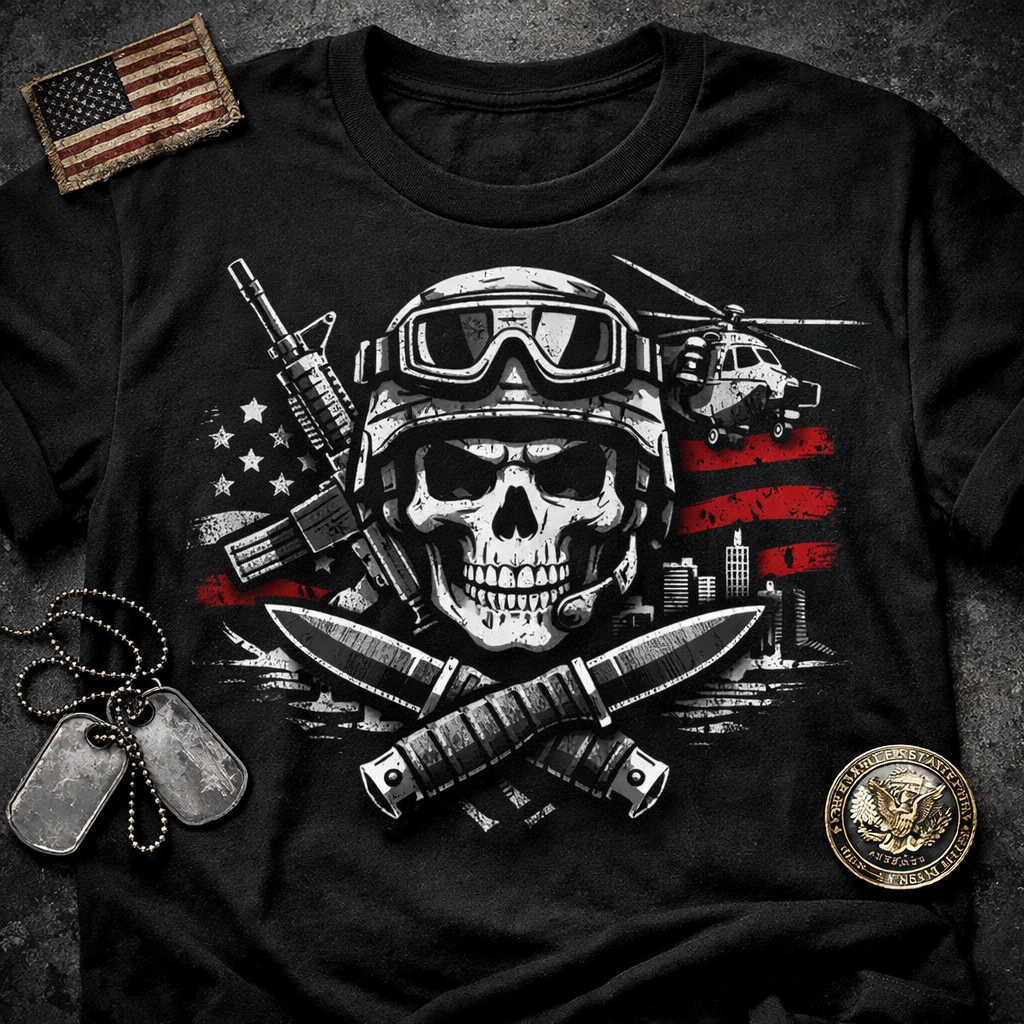
Every design we create at Thirty Seconds Out starts with that question: Does this joke land with the people who've been there? Does it acknowledge something real? Or is it just trying to be edgy for the sake of selling shirts?
We've scrapped more designs than we've printed. Because weak humor is worse than no humor. A bad joke about serious subjects isn't dark comedy, it's just bad taste.
The Inside Baseball Problem
Here's the thing about inside jokes: they're supposed to be inside.
Not everyone will get your shirt. Your coworker from accounting might read it and not understand. Your neighbor might ask what it means and you'll give them the short version that doesn't really explain it.
That's by design.
Some experiences create language that can't be fully translated. The humor that comes from those experiences doesn't need to be accessible to everyone. It needs to be meaningful to the people who share the context.
When someone who gets it sees your shirt and smirks, or does the knowing nod, or says "fucking love it": that's the point. That's the moment of recognition. That's the unspoken: "I see you. You're not alone in this."
We're not trying to make humor for the masses. We're making it for the tribe.
Lightness Against the Weight
Stories become too bleak when they lose all levity. Same goes for life. If you never find the humor in the chaos, if you never allow yourself to laugh at the absurdity, the weight becomes unbearable.
The research backs this up. Dark comedy serves as a psychological counterbalance during difficult times. It allows people to acknowledge serious struggles while maintaining perspective. It's the relief valve that keeps you human.
This is why the funniest people you'll ever meet are often the ones who've been through the heaviest stuff. They're not laughing because nothing matters. They're laughing because everything matters too much to take it all seriously all the time.
The jokes become a form of emotional triage. You process what you can, you set aside what you can't deal with yet, and you find something to laugh about so you don't drown in it.
Why We Wear It
So why put it on a shirt?
Because clothing is communication. What you wear tells people who you are before you say a word.
When you wear a shirt with dark military humor, you're broadcasting: I understand the cost. I've paid some of it. I'm still here. I'm still able to laugh. I'm part of this community.
You're also giving permission to others who might be struggling. When they see someone else wearing their trauma as a punchline, it normalizes the coping mechanism. It says: this is how we deal with it. This is allowed. You're not broken for finding humor in dark places.
The shirts become conversation starters with the right people and filters for the wrong ones. They create space for connection without forcing it. They let you signal your tribe without having to explain your entire service record.
The Line We Don't Cross
There's a difference between dark humor and cruelty. Between laughing at shared trauma and making light of someone else's pain. Between acknowledging darkness and glorifying it.
We know where that line is. So do you.
The jokes we make, the funny veteran shirts we create: they're always punching up at the circumstances, not down at the people caught in them. They're processing tools, not weapons. They're about resilience, not recklessness.
When we design a shirt, we ask: Would the people who lived through this wear it? Would they laugh? Or would they feel like we're trivializing something sacred?
That filter matters. It's the difference between merchandise and meaning.
Heavy Days Require Light Touch
The world is heavy enough without pretending it isn't.
Dark humor doesn't deny the weight. It acknowledges it and refuses to be crushed by it. It finds the absurd in the serious, the ridiculous in the tragic, the human in the mechanical.
When you wear your jokes on your sleeve, literally: you're participating in something bigger than fashion. You're part of a coping mechanism that's kept people functional through deployments, disasters, and the daily grind of jobs that demand everything.
You're saying: I see the darkness. I respect it. And I'm going to laugh anyway.
Because the alternative is letting it win.
And we don't do that here.

