

7 Mistakes You're Making with Morale Patches (And How to Build a Real Collection)
Feb 27, 2026
You're doing it wrong.
Not all of you. But most of you. Your morale patches are falling off mid-movement, your gear looks like a Pinterest board exploded on it, and half those patches don't even mean anything to you. You just thought they looked cool on Instagram.
Building a real morale patch collection isn't about hoarding every design you see. It's about curating pieces that actually matter, patches that tell your story, represent your values, or at least make you laugh when everything else is going sideways.
Here are the seven mistakes you're making, and how to fix them.
Mistake #1: Buying Cheap Patches That Fall Apart in Three Weeks
You found a patch for $3.99 on some sketchy website. Score, right?
Wrong.
That patch is going to fray, fade, or straight-up disintegrate the first time you throw your pack in the truck bed. Cheap patches use low-quality backing material, thread that breaks down in sunlight, and hook-and-loop that loses its grip faster than your New Year's resolutions.
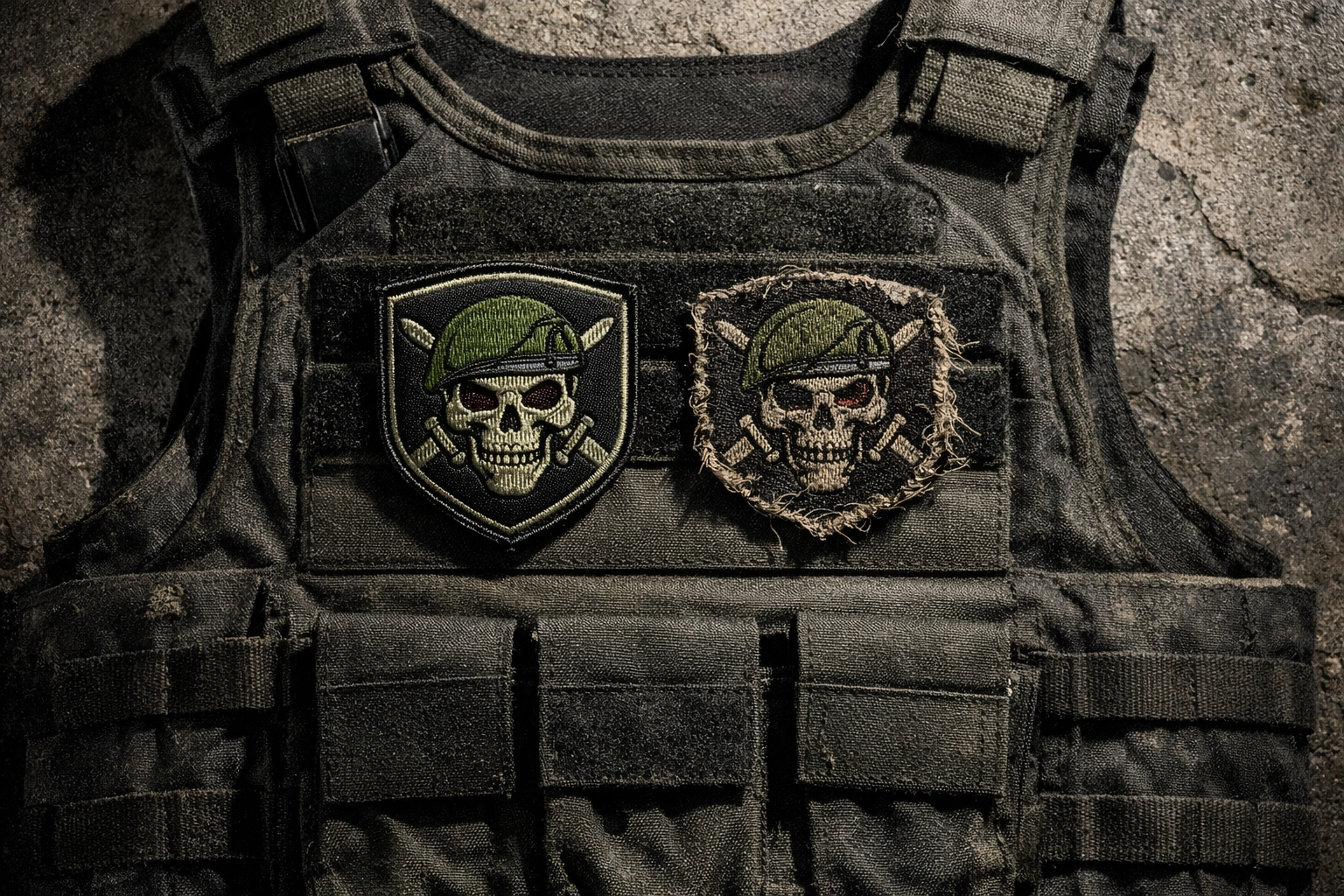
The Fix: Invest in quality military morale patches from manufacturers who actually care about durability. Look for tight stitching, reinforced edges, and hook-and-loop (not Velcro®, that's trademarked) that actually holds. Yes, you'll pay more. But you'll also still have that patch in five years instead of buying replacements every month.
Quality patches are an investment in gear that lasts. Period.
Mistake #2: Turning Your Kit Into a Walking Billboard
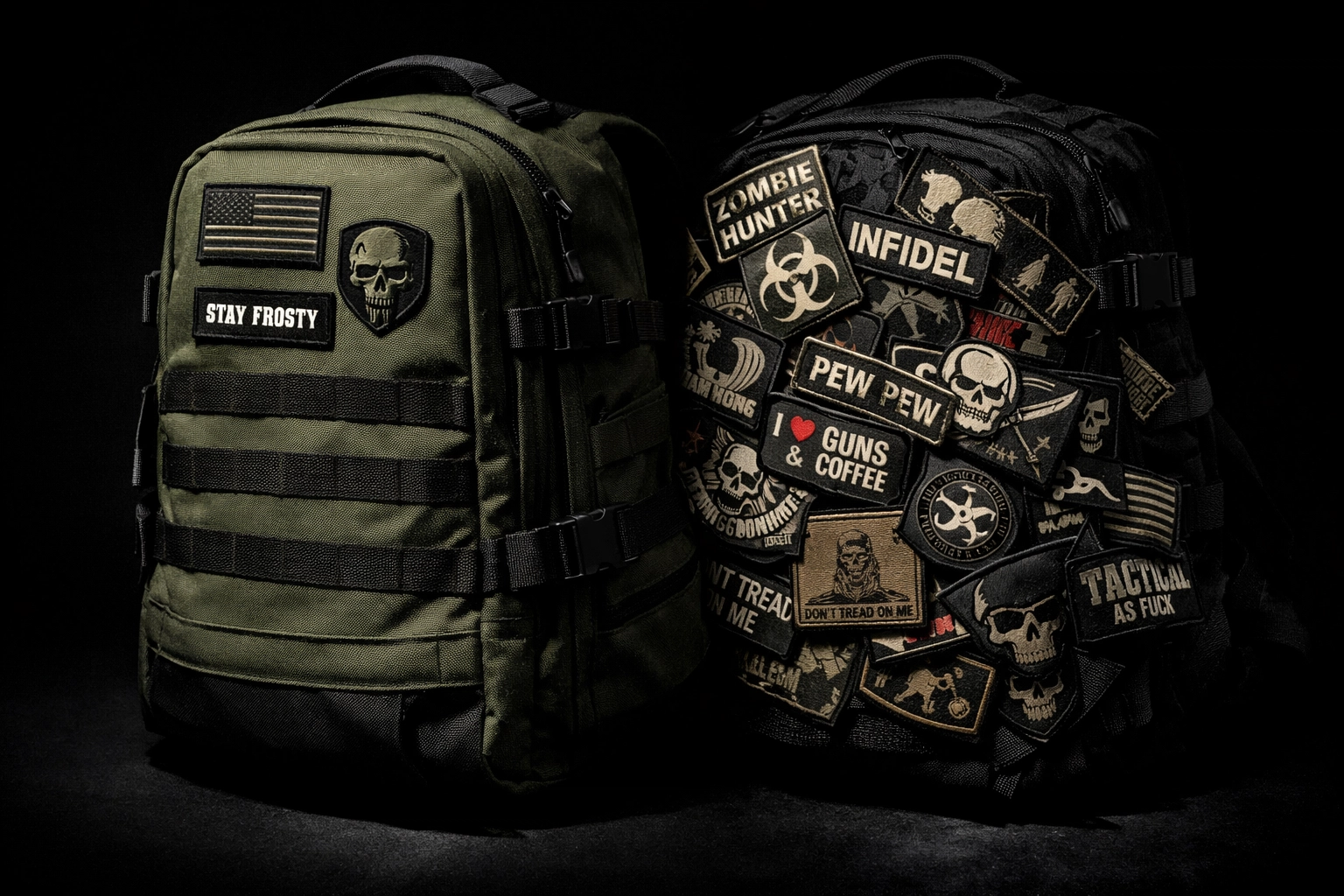
More patches doesn't equal more personality. It equals visual chaos.
When every square inch of your pack, plate carrier, and hat is covered in patches, you don't look tactical. You look like a NASCAR driver sponsored by inside jokes nobody else gets.
The Fix: Less is more. Pick 3-5 patches max per piece of gear. Choose patches that complement each other or tell a cohesive story. Your ruck doesn't need seventeen different jokes about coffee, beards, and tactical gnomes. One good one will do.
Think curation, not collection.
Mistake #3: Ignoring Placement Strategy
Slapping patches wherever they happen to stick is amateur hour.
Placement matters. A patch on the front of your plate carrier needs to be visible but not obstructive. Patches on your pack should be accessible if you need to swap them out. And patches on your hat? Those better not interfere with how it sits.
The Fix: Map it out before you commit. Consider:
- Visibility: Can you actually see it?
- Function: Does it block zippers, straps, or gear access?
- Weight distribution: Is one side of your pack now heavier because you went patch-crazy?
- Context: Is this appropriate for the environment you're heading into?
Think about placement like you'd think about real estate. Location matters.
Mistake #4: Not Understanding Hook-and-Loop Quality
All hook-and-loop is not created equal.
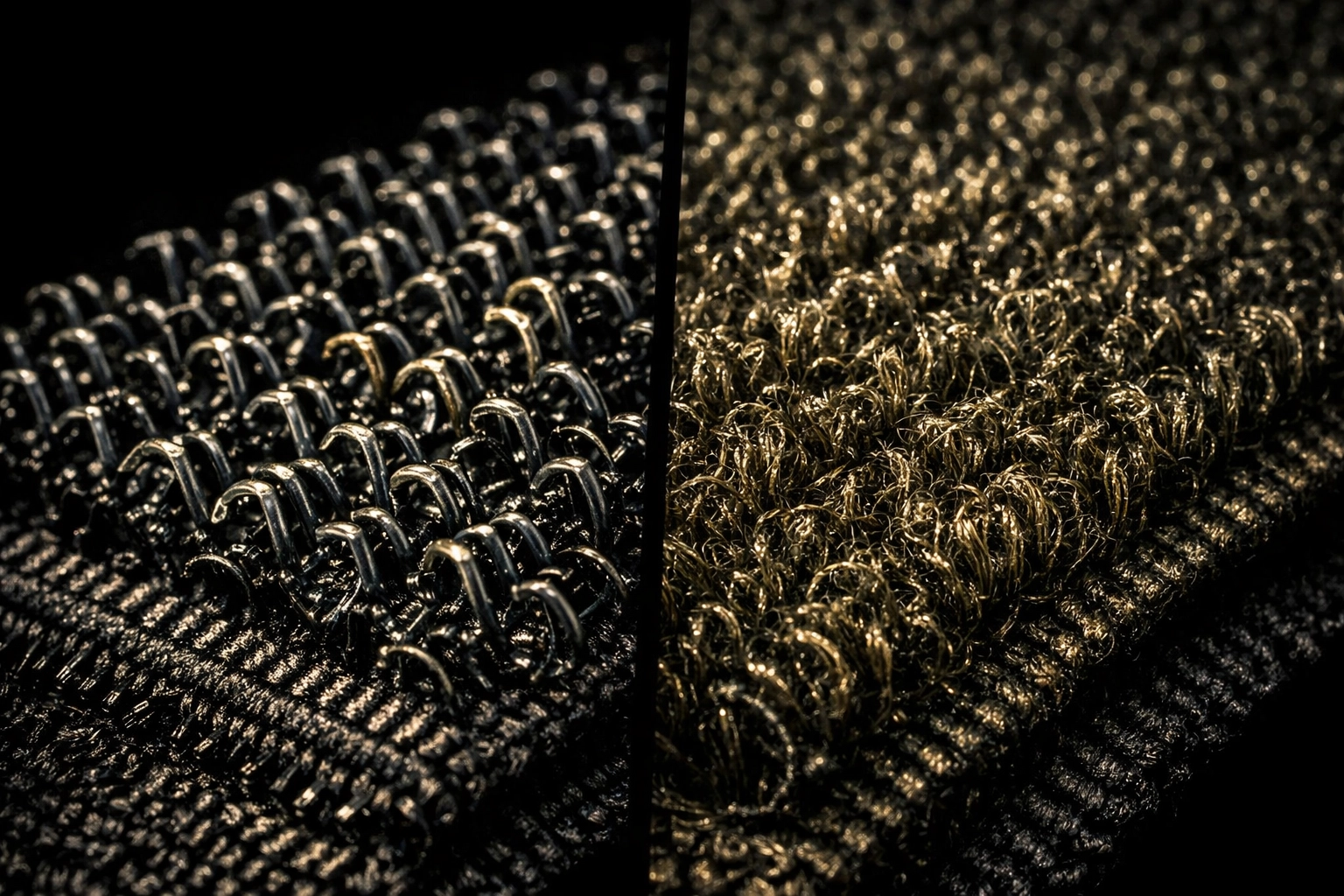
You've got 3M-grade military spec material, and then you've got the garbage they use on kids' shoes that stops working after two weeks. If your patches keep falling off, it's not bad luck: it's bad material.
The Fix: Upgrade your backing panels to military-grade hook-and-loop. Check that your patches use high-density loop backing. The difference between quality and cheap is literally whether your patch stays attached during movement or ends up in a ditch somewhere.
Good hook-and-loop grips hard and doesn't quit. If yours is sliding around, replace it.
Mistake #5: Mixing Incompatible Styles Like You're Running a Flea Market
Your gear has a blood type patch, a rainbow unicorn, a Punisher skull, and a patch that says "I love my cat."
Pick a lane.
Morale patches are personal, sure. But there's a difference between eclectic and incoherent. If your collection looks like twelve different people built it, you need to reassess.
The Fix: Build around a theme or vibe. Are you going for dark humor? Patriotic? Unit pride? Outdoors culture? You don't have to be boring, but you should be intentional.
Your patches should work together, not compete for attention like toddlers at a birthday party.
Mistake #6: Never Rotating or Maintaining Your Patches
Your patches are getting sun-faded, frayed, and covered in dust because you never take them off, never clean them, and never rotate them out.
Stagnation is death. Even for morale patches.
The Fix: Treat your patches like gear, not stickers. Rotate them based on mission, season, or mood. Clean them when they get dirty: most can handle a gentle hand wash and air dry. Store the ones you're not using in a cool, dry place, not the bottom of your ruck where they're getting crushed under your sleeping bag.
Quality patches last years if you take care of them. Treat them like they matter.
Mistake #7: Buying Patches You Don't Actually Connect With
This is the big one.
You're buying patches because everyone else has them. Because they're trending. Because some Instagram influencer told you they're "must-have" for your kit.
That's weak.
The Fix: Only buy morale patches that actually mean something to you. Maybe it's your unit insignia. Maybe it's a dark joke that helped you get through a rough patch. Maybe it's a tribute to someone who didn't make it home.
Whatever it is, it should be authentic to your story, not someone else's aesthetic.

Your patch collection should tell your story: the missions you've run, the teams you've been part of, the values you hold, or at least the jokes that keep you going when everything else is garbage. Don't dilute that with patches you bought because they looked cool in someone else's photo.
Building a Collection That Lasts
Here's the reality: morale patches aren't just pieces of fabric with hook-and-loop backing. They're cultural currency in the tactical community. They're conversation starters, identifiers, and sometimes they're the only way to lighten the mood when everything around you is heavy.
But like anything worth doing, building a real collection takes time, intention, and a refusal to half-ass it.
Start with quality. Be selective. Place them strategically. Rotate them out. And for the love of everything, only wear patches that actually matter to you.
Your gear is an extension of who you are. Make sure it's telling the right story.
You're Either Building or Wasting Money
Every patch you buy is either adding to a collection you'll be proud of in ten years, or it's clutter you'll eventually throw away.
Choose wisely. Buy quality. Be intentional.
And if you're ready to build a collection that doesn't look like trash, you know where to find us.
Expect to self-rescue. Even your patch game.

